2019-09-13

Clauses, Pauses and a Full Moon

There are days when I feel specially stupid.. This week, I was trapped in many of those days, specially on Monday and Wednesday at Writing 3 classes. 

On Monday, Thiago made a pause on the writing process to discuss some grammar issues, as proposed on the syllabus. The subject was Sentence Parts, in the composition skills topic. What is a clause, a phrase, a sentence and the errors a writer can incur into like leaving a sentence fragment without a complement on the text, run-on sentences and comma splices. I never have heard about those in any class, but I come across many of them often in text editing though. 


While writing can be a bit instinctive sometimes, knowing those kind of sentences by name, identifying and correcting them by the established norms gives me a sense of accomplishment. I feel like I'm finally getting to know more about English in different ways. Under the danger of sounding foolish, I must say that I even feel happy (and still stupid) in classes like this. "OK, see?, you can check out something that you didn't know from your imaginary list", is my main thought. 

I'm really slow to new subjects, though. It is not a depreciating, I swear, and not a charming self depreciation,  like those we are used to while talking about our skills or lack of (specially if you are British :). In fact, I take some time (a long time in some circumstances) to actually understand in the bottom of my soul and mind some new subject or task. That happened with big things like the shorthand classes I took when I was 18 or academic research (in the last one, I was 35, so it is not an age thing). It is the same way to minor subjects, like a lesson in a writing class.

This way, you can only imagine how the quiz on Wednesday went. First, I dread tests, because I know my lack of objectivity, clear thinking and patience. All my writing exams has been a bit disappointing. I should be used to it by now and just accept my altogether failure on the matter. It is not I flunk every test, but after I'd give it back to the examiner, I usually fall in a turmoil about what I could have done differently. You could call it crazy, and you'd not be wrong... But, still. Tests. They're not easy, and it doesn't matter if it is a dissertation to get in a masters program or a quick quiz in the writing class.

There's one last factor for my sense of failure: I'm not able to stay long with the text, giving to it the attention that it deserves. I don't know why, but all coherent thoughts escape me during a test; also, I'm not able to reread it after finishing it (Rachel, the teacher on Writing 1, told me that many times after correcting tests). So, just after a teacher take it on their capable hands, I'm already regretting not giving it more time. 

That's the story I wanted to tell today. A little bit of unnecessary anguish, a self reflection of my impatience, the the inability of editing my own texts (and I'm a text editor, I love to correct other people writings), the terror of having a test on my hands... 

A good and fit story for Friday, 13th!

Resultado de imagem para friday 13th full moon

Thank you for still being here, following this dramatic student saga through writing, reading and failing tests.

Stay tuned!


PS: And it's a Full Moon! 

Resultado de imagem para friday 13th full moon

PPS: The images about Monday's class subject are from the following book: SMALLY, R. L; RUETTEN, M. K.; KOZYREV, J. R. Refining Composition Skills. 6. ed. Boston: Heinle & Heinle, 2012.

2019-09-06

Second chances

Since the first semester in the Translation course, a few years back, I had to confront my writing in different ways, throughout the writing classes.

Prewriting in Writing 1
The very first class (8/14/2014)
Throughout the Writing 1 class, the most difficult was to realize how my English was really bad. I did know that, of course, but the first class put a mirror in front of me, and it was hopeless. After that, though, everything was roses. An amazing teacher, who knew how to bring people closer in a way to allow a really great learning experience. My best friends in the university come from this class - it did help that most of us had two classes with the same teacher, one right after the other. But the gist of it was that we had a great teacher in Raquel, who gave us an amazing environment while  happily squeezing our brains out with a big smile.

Writing 2 was tremendously challenging. Again, a great teacher, one who corrected our essays in a very through manner. We had to write many distinct text genres, culminating in a five pages academic essay. I almost flunked this class, but ended up with a good grade actually and some bruises on my writing ego :)

Clustering suffering in Writing 2
(8/12/2015, almost a year after the first one...
But I ended up droping out the whole semester)
So, here we are at  Writing 3 class, this time with Thiago and essay writing as the focus of this journey. We're still at the beginning for me to say something, but one thing is certain: there's no way to escape prewriting classes.

However distinct the writing classes every semester, one thing does not change ever: the day we have to study prewriting technique, a day I've learned to dread with all my heart,soul, mind. Seriously.

The reason for that hate (I actually used this word in class) for prewriting techniques is not clear to me. The classes are fun, actually, because of the many elements presented. Even if I know that I'd probably won't use them, there's a clear reason why the subject is a part of the writing class. Even so, I'm usually cranky and impatient during the explanations about Brainstorming, Freewriting, Asking the Wh questions and Clustering.

I'll tell you the end of this long story: my favorite of those (or the least hated) is Freewriting, since I usually write like that, waiting to see what will come next (edit is not easy, though). As I said before, I think in what I'm writing while tipping, and freewriting fits into that perfectly. Or almost.

This time around (the magic third time), I was really surprised by what I got out of the exercise with the four prewriting techniques. While organizing the items in Brainstorming (my chosen theme was Travel), ideas for a text started to form in front of my eyes. "Ok,", I thought, "maybe there's something worthy in here" (I told you, my faith in this was zero). I wrote on my notebook: "You don't know where these things are going until you categorize them in groups". And that's true.

Freewriting in Writing 3
(8/28/2019)
For freewriting, I chose Iceland. As suggested by Thiago, I highlighted parts of the text that made more sense or could be an initial idea for a text. Based on that, I answered the Wh questions: Who, what, where, what and how. Slowly, what I wrote without a close thinking, started to make more sense when categorized. At that point, I've already realized that this class was being a bit different for me. And I know why (I'll let you know just a few lines below).

At last, there was the horrible, terrifying, messy Clustering. And there was it again, a surprise: it actually made sense, and more ideas came to mind about the subject I was chose (Iceland again). I was silently talking to myself how stubborn I've been all this time. I'm not only headstrong, I'm also a bit slow: three classes to understand the meaning and important of prewriting? Please, get a grip.

Ok, here's what I thought was different this time and that allowed me to concentrate on the techniques: we tried them alone. In the other classes before, they were exemplified on the white board, with all the class giving examples. This time, even if we had to share our conclusions with classmates, we wrote it all alone. There was no way out for me. So I had to really take a look at those methods and tried them in a subject that I chose. And that, my friends, made all the difference.

Now I'm a totally transformed writer? Not yet. I'm pretty resistant to prewriting yet... but I'll surely give it a chance. The beginning of a new life was this post (see?), with a shy draw of what I wanted to talk about when I talk about prewriting.

See you soon!

Stay tuned :)

A timid attempt at planning...


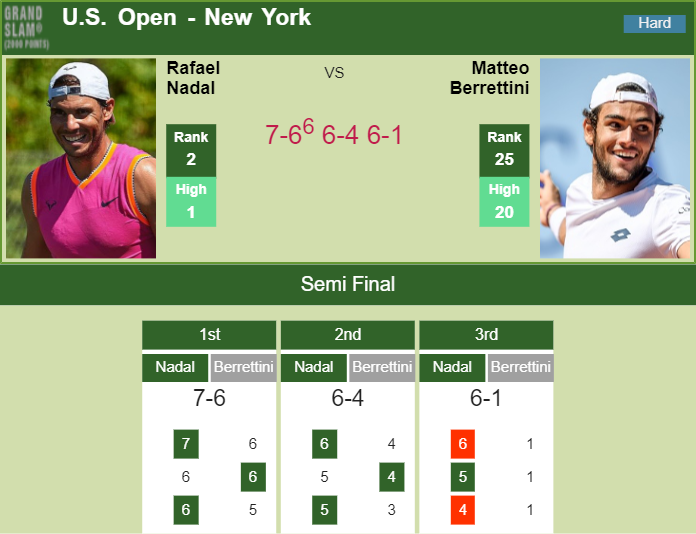
PS: I haven't had thought until now in let you know about the background of this blog writing. Each post has a different kind of mood, a different setting. For most of them, I need some kind of noise - not always music, but something happening around me while I write. Even if the absolute silence is not a possibility, quiet is not my environment for writing. I enjoy quiet times often, but not while working (that equals to writing for me). Since I started this portfolio in the form of a blog, the main background to it has been tennis matches - my favourite sport on TV (I'd never played it, not with an arm a bit damage from a life of typing). On this specific day, it was Rafael Nadal versus Mateo Berretini, in the US Open semifinal. It was late, I was incredibly tired, but the game's narration lulled me through the writing.

Resultado de imagem para nadal berrettini final score

2019-09-02

Patterns

Just a minute, please...
I was outrageous late to the class on August, 21. I mean, really, really late. Still on crutches for a knee injury, my slow mornings had become even slower. Plus, the class was in another room, and it was like I haven't wandered the place for more than three decades... Well, a labyrinth is always changing, and the way we interact with places is not linear. Specially for me :)

So, one crutch on hand, a full room, I tried to get a grip on what was being discussed. The first bit I caught was patterns... Every writing has a pattern, Thiago was saying. I doesn't matter the genre - fiction, non-fiction; suspense; romance... -, there will be a kind of pattern there.

We're talking here mainly about writing, but I'll give a clue about me as a student: I just cannot keep my mouth shut. One thing leads me to another, a reference, a thought, something I've heard before. So, even tremendously late, before I could stop my thoughts, I saw myself asking:  But is there a pattern even when the author wants to break the narrative habitual ways?

Yes, it was the answer. There is a pattern even in transgression.

I was thinking particularly about Chuck Palahniuk when I presented the question. I thought for an instant in developing the idea, but I finally got a grip and stop at time. The truth is that, although I enjoy discussions and think sharing those kind of thoughts is important in life and academic environments, I'm shy of my English. I also don't like the feeling that I'm being inappropriate. So Palahniuk and his transgressive narrative had to wait till today to be a part of the debate.

In order to break a linear narrative and create something new or different, a writer has necessarily to be aware of how to write and tell a story. The classic narrative flow has a beginning, a development and a conclusion. Not every author or screenwriter follows this through, and breaking this linear sequence is a style in itself. So, a pattern. And there's the answer to my initial question.

Following this presentation, Thiago indicated an activity on the book we are studying this semester (SMALLY, R. L; RUETTEN, M. K.; KOZYREV, J. R. Refining Composition Skills. 6. ed. Boston: Heinle & Heinle, 2012), in the chapter about the process of writing. We had to write, in class, our answers to the following questions:

First, we had to describe who we are as writers, what we like or dislike, what is easy or difficult. I think that each post will be a part of this first question, composing a more complex and complete answer, even if not final. Probably, at the end of the semester, I'll have a different perception about writing and myself. That's what classes and studying are for, actually. I'll tell you about it at the end, for sure.For now, my answer is basically this:

I'm a messy writer. All the organizing happens in my head, thinking about the subject before writing. I think, and in doing that, the writing itself seems so easy (...). I'd rather read about what I'll write about after this first thinking process. Otherwise, I absorb what other are saying, and my final text ends up being a sort of a summary, not a real essay. I start writing with my first thoughts, and it is more difficult than I guessed it would be in my head (of course it is, what a chance of being differently?). With the first draft, or at least the introduction, and my thoughts and feelings about the subject more clear to me, I start researching the the topic. I've learned throughout my masters, that a counterpoint is essential. We don't present only our point of view about things, but establish a dialogue with other ideas, way of thinking and so. This way, reading about the subject becomes even more relevant to our writing. It is not easy. Writing is a confrontation with ourselves, and I observe that the apparently easiest way would be just burping out our thoughts about the subject as it was the whole truth. It is not, so what seems the easiest way out is actually a big fat trap.

So, first, translating what seems so easy on my mind to the writing form is a great challenge for me. I always think I have already elaborated the text, what proves me wrong when I finally start to write.

Second: for me, it is really hard to write by hand, the result of many years writing and editing on a typewriter (I'm that old, yes) and computers. The way I write determined my way of thinking - starting with a kind of free writing, going back and forth, erasing, adding, changing the sentences and order of paragraphs (what only became possible after text editor on computers). I'm a byproduct of typing, that's the truth. So, handwriting is almost a torture for me - less so now that I'm back at university with a paper notebook and million of pens (I choose a different one depending on my humour, very OCD style).

The other difficulty will be listed on the next post, as it was the specific subject in our third class. 

There are many and many more hardships on writing. Those above are just the ones that came to me in class and I wrote it down on my notebook. As new questions and subjects emerge, they'll be addressed here.

Ending this topic (you can breath now), Id like to highlight how my writing depends on my reading, as said in the first post. It is not easy, I don't think I'm able to write fiction, but it is a dream in life for me. Who knows? Someday (not a day on the week, I'm aware) I might develop enough patience and discipline in order to tell a story that I would enjoy reading.

The second topic in the actividy asked from us to describe the most successfully writing experience we had. Mine is a testimony of how a writing class changes our take on writ ting, presenting other ways e new possibilities. I thought I was too far gone for that,totally without hope,  but my experience at a course named Laboratório de Texto (very similar to Writing 1) proved me wrong (I hope it is not just an illusion).

Just a pick at my cherished tale
One of the most successful writing experiences of my life is a result of a proposed exercise in which the students wrote a short story almost without noticing it -  a brilliant strategy presented by the teacher. First we had to write a description; following, we had to give a personality to who/what we described. After, we had create a plot involving the subject/object. I dont' remember every step of it, but I still can feel the gratification of reaching such a result. I'm not saying the text per se is excellent or something like that. However, the experience was incredible. Through it, I realized how important is this kind of writing education and practice. I'm very proud still, I must say.

The last topic on the exercise in the second class asked about an unusual occurrence, a way to make use describing techniques. I'll not tell  you about mine. It is interesting, but not as much as the one a student told us. According to her, she saw a guy in campus wearing a Twilight tee, something that strike her as unusual: so long after the phenomena of the vampire books and movies, someone at the university wearing a t-shirt, and it was a guy - the Stephenie Meyer books were more popular between female (of vary ages). Twilight was one of my subjects on the doctoral research, I even gave a lecture about it for a group of teachers in public school. This way, I was really curious to know that guy.

Just before ringing the imaginary bell, there was another activity: write about our specific needs for this course. Mine? Improve my writing in coherency and grammar skills. Practice. Find another ways to achieve a better writing. Be happy.

That's it for today, folks! Sorry for another long post... I told you that I talk too much. 

Stay tuned!

Old times of a straight line...


2019-09-01

First thing: Introduction

Hello there!

Here's one more blog by Amelie's Journey, the name by which I sign all my posts on the Internet.

As you can see on the right side, my name is Adriana. The choice for Amelie Poulain as a reference reflects how, since childhood, I used to interact with the world by movies and books. At the time I published my first blog, I was still touched by Amelie from The Fabuleaux Destin d'Amélie Poulain (2001). I could relate to that amazing character, her way of thinking and conducting us through a story that is a delight till this day. So, Amelie is now the name and face of my posts in the blogger platform. 

A life (and a house) full of Amelies (and cinema)

Writing 3 Experience is a portfolio in the form of a blog created as an activity  proposed in Expressão Escrita 3 (Writing 3) by Thiago B, the teacher. The discipline is part of the curriculum for the degree in Translation (English) at the University of Brasilia, Brazil. Teached in English (not in Portuguese), the  main subject on this semester is how to write academic essays, with the presentation of its many techniques, structure and rules, and some grammar topics as well. 

Since the first class, though, Mr. B. has emphasized how one important activity in his class is to develop an awareness to who we are as writers, what is difficult or easy for us (if an easy aspect in writing  would be possible...) , what is our writing process.  For this, the student have to create a portfolio, in the form they like. After six or five blogs (I actually lost account of how many), I thought: And why not? Here we are, then, Amelie and Me, in one more blog adventure for those who are not sick of us yet.

At each class, a question or a sort of challenge is presented to us, students, in order to think about our writing experience. In the first class (August, 19th), Thiago (we don't really call the teachers by the last name in Brazil) presented the idea of a portfolio, saying how the goal is for us to talk about our background of writing and, mainly, about writing in English (the students are native in Portuguese).

I know this post is getting way too long, but here goes the first assignment, presented in the first class: the student's background as writers.

My writing comes from my love of reading, and I love reading stories. Fiction is my love in life, whether through movies or books. That's the reason why, since the first time I enrolled on the university for a postgraduate degree, my goal was to research the role fictional narratives have in the formation of the subjectivity. Even in my first undergraduate course (History), cinema figured as an important source of research and a way to thinking many historic aspects. Going back a little  more, movies and books were my guides in life since early childhood, and I don't see myself researching other subject, in different areas and with various purposes.

Fourteen years ago, the journey in post graduation started with a master degree in Education, studying how a movie theater can be someone true home. The way I see the world today is a result mainly of my experiences in movies. I got my degree in 2007, with a dissertation that, if it is not what I would have presented today (it got old, and so did I), it is still close to my heart, an important achievement in my life.


Following this first attempt at a academic research, I tried to continue my research in the doctoral studies. The same subject, Education, the same object, movies, now with a more focused eye to fictional narratives, mainly the ones that are a cultural phenomena, such as Twilight and  Hunger Games. It bothers me how academic environment refuses to study this kind of cultural productions and its role in the life of readers/viewers, as if only what is considered "good art" has a place in our lives. It is the contrary, actually, I think: the most popular films and books are an important part of the way we see the world, specially for the young public - but not only them. An education that not take that on account is basically outdated and not really attentive to the needs and the reality of the students.

Because of my research at the time, I started a blog to publish my first experiences in writing fiction, as a way to understand "from inside" what I was talking about. The idea came to me at the end credits of the movie 2012, another one about the end of the world. They are so many, with different tragic events that try to destroy Earth and humanity... I thought how it would be if the world actually ended, and all the actors that worked on those kind of flicks met around a fire in a land turned deserted for some reason. And so, there was Os Degraus de Amélie.

I've learned a couple of things from the experience: One, I'm definitely not a patient writer (despite being an easygoing reader and viewer, open to long, slow books and movies); two, stories have their own lives. All those testimonies from authors and screenwriters about how a story takes the wheel over them is not a silly remark. They really have their own will, and characters usually go to a different direction than the one intended first by the author.

If you'd check out my stories in Degraus, a warning: they are very simple, a comment about a movie or a story or the remembrance of those two. Don't expect much. I had fun writing them, I hope you'll enjoy the experience of reading it as well.

It wasn't a surprise when I wasn't able to conclude my research. Despite it's being a qualified project, I didn't get my degree. The 279 pages text is at the bottom of a drawer, waiting for me to finish  or burn it - I haven't decided yet.

With a sudden halt on my plans, I saw myself without a platform to write about fiction, movies and books. This ways, as a sort of challenge, I created One Movie a Day with Amelie, on which I told about my experience of seeing at least one movie per day for the duration of a year. It was a great and enlightening try.

Strand - a dream bookstore 
Going back a bit (once more), here's an advice: I never really had a formal education in English before this college experience with Translation. My first  foreign language at school was French, and  only at fifteen I had my first English classes. Every year in high school we've had the same lessons, so it wasn't an advanced course, only the what we needed to know to pass the exam to enter college. At UnB I've had more English classes, but my real teacher on the language was books, movies and TV shows, specially Friends. In 1999, I spent 40 days in Vancouver for an immersing English experience. And it was that.

However, it was in 2005, when the first Fnac store came to my city, that I was able to improve my English in a more efficient way. I started to read fiction  in only in English; imported pocket books were very inexpensive. This way, I could read books that weren't translated to Portuguese. That was my real English class.

It is a sort of learning that's still going on. I'm aware my English is very flawed, a sort of a mutant experiment. I'm always trying to reach the level of my fellow classmates, being specially shy of speaking in class (my accent is worse than my writing). Even so, It's actually nice for me writing in English, like I could have access to other ways of thinking about things. A different language is definitely a way to a diverse form of thinking. 

To short an already long tale, as a writer, I'm a good reader. That's the most important part of my writing, as it was during my work as a text editing. It doesn't matter if it is an academic essay, a blog post, a fiction short story, a dissertation... what my experiences and dreams as a reader will always be an import part of it. 

But that's not all... Much more is yet to come. Stay tuned :)


An ideal writing set: good coffee, cookies, music that helps to focus and, the most
important, a working notebook (mine is a constant challenge)

PS: The idea here is to post after every class in which there's a new reflexion about writing, as proposed by Thiago. Because it took me too long to start, the next week there'll be post every (or almost) day (I hope so), until I cover the last classes. 

PPS: This blog desing is very busy, but I like the image of a background of memories behind the writing. I'm waiting for Thiago's feedback though... Maybe the reading will be a bit unconfortable the way it is. Let's see what happens next, as it is a try.

PPPS: I mentioned three blogs: As Viagens de Amélie, Os Degraus de Amélie and OMAD. There another two: an attempt to follow the experience of challenging myself in 1001 Movies with Amélie (an idea for later, maybe... I have  not been able to follow it up) and the Portuguese version of OMAD, Um Filme por Dia com Amélie (I'm way behind the translations, btw).

To be continued...

So, this is The End, my friends... Or maybe just not :) Writing the final post on what started as a activity for a class, I realize how ...